Fire Alarm Detector Contamination –
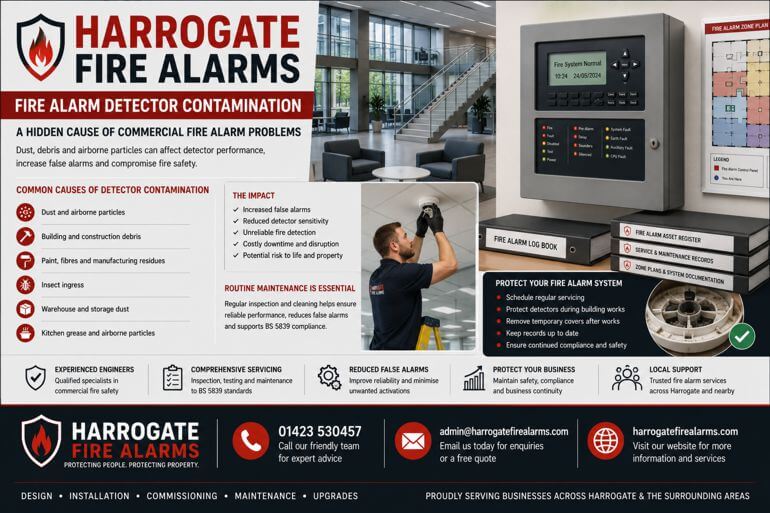
Most commercial fire alarm faults are assumed to be caused by ageing equipment, damaged wiring or component failure. Whilst these issues certainly occur, one of the most common causes of fire alarm performance problems is often far less obvious: detector contamination.
Across Harrogate, commercial buildings are exposed to dust, airborne particles, construction debris, manufacturing residues and environmental contaminants that can gradually affect the performance of fire detection equipment.
Over time, contamination can reduce detector effectiveness, increase false alarms and ultimately compromise the reliability of an otherwise well-maintained fire alarm system.
Understanding how contamination affects fire alarm detectors can help businesses improve system reliability and avoid unnecessary disruption.
What Is Detector Contamination?
Fire alarm detectors are designed to identify changes within the surrounding environment.
Smoke detectors monitor airborne particles whilst heat detectors respond to temperature changes.
When contaminants enter the sensing chamber of a detector, performance can be affected.
Common contaminants include:
• Dust
• Building debris
• Paint particles
• Insect ingress
• Manufacturing residues
• Airborne fibres
• Warehouse dust
• Construction materials
These materials can accumulate gradually without being visible from ground level.
Why Contamination Causes Problems
As contamination builds inside a detector, the sensor may begin to behave differently.
In some situations, contamination can make detectors more sensitive, increasing the likelihood of false alarms.
In other cases, contamination may reduce sensitivity and delay fire detection.
Neither outcome is desirable.
The objective of a fire alarm system is to provide accurate and dependable fire detection when required.
Contamination can undermine that reliability.
Commercial Premises Most at Risk
Whilst any building can experience detector contamination, certain environments are particularly vulnerable.
These include:
• Warehouses
• Manufacturing facilities
• Workshops
• Schools
• Retail units
• Construction projects
• Commercial kitchens
• Storage facilities
Buildings undergoing refurbishment are especially susceptible due to the increased levels of airborne dust generated during works.
The Importance of Protective Measures
Where building works are taking place, fire alarm detectors should be protected appropriately.
Temporary covers can help prevent contamination during construction activities.
However, these covers must always be removed immediately once work is completed.
Leaving detectors covered after works finish can create a serious life safety risk.
Professional contractors should always coordinate with fire alarm engineers when refurbishment projects are planned.
Signs of Detector Contamination
Contaminated detectors may generate several warning signs.
These can include:
• Increased false alarms
• Repeated detector faults
• Detector sensitivity warnings
• Maintenance recommendations
• Unexplained alarm activations
Modern addressable fire alarm systems often provide diagnostic information that helps engineers identify contamination before major problems develop.
The Role of Fire Alarm Servicing
Routine fire alarm servicing plays an important role in identifying contamination issues.
During maintenance visits, engineers inspect detector condition, review system performance and assess whether cleaning or replacement is required.
Regular servicing helps ensure:
• Reliable detection performance
• Reduced false alarms
• Compliance with standards
• Early fault identification
• Longer equipment lifespan
Without ongoing maintenance, contamination issues may remain unnoticed until operational problems occur.
When Cleaning Is Not Enough
In some situations, contamination becomes too severe for cleaning alone.
Older detectors may require replacement to restore performance and maintain compliance.
Modern detectors often incorporate enhanced sensing technology that can improve reliability and reduce unwanted alarm activations.
A replacement programme can sometimes provide a more cost-effective solution than repeated cleaning and maintenance.
Supporting Business Continuity
False alarms create disruption.
Staff evacuations, operational downtime and unnecessary investigations can all affect productivity.
By addressing contamination proactively, businesses can reduce unwanted activations whilst maintaining effective fire protection.
For larger commercial premises, this can deliver significant operational benefits over time.
Commercial Fire Alarm Maintenance in Harrogate
At Harrogate Fire Alarms, we provide professional fire alarm servicing, maintenance, inspections and system upgrades for commercial premises throughout Harrogate and the surrounding areas.
Our experienced engineers can identify contamination issues, assess detector condition and recommend practical solutions to improve reliability and compliance.
Whether you operate offices, warehouses, schools, manufacturing facilities or commercial premises, we can help ensure your fire alarm system continues to provide dependable protection for your people, property and business operations.